
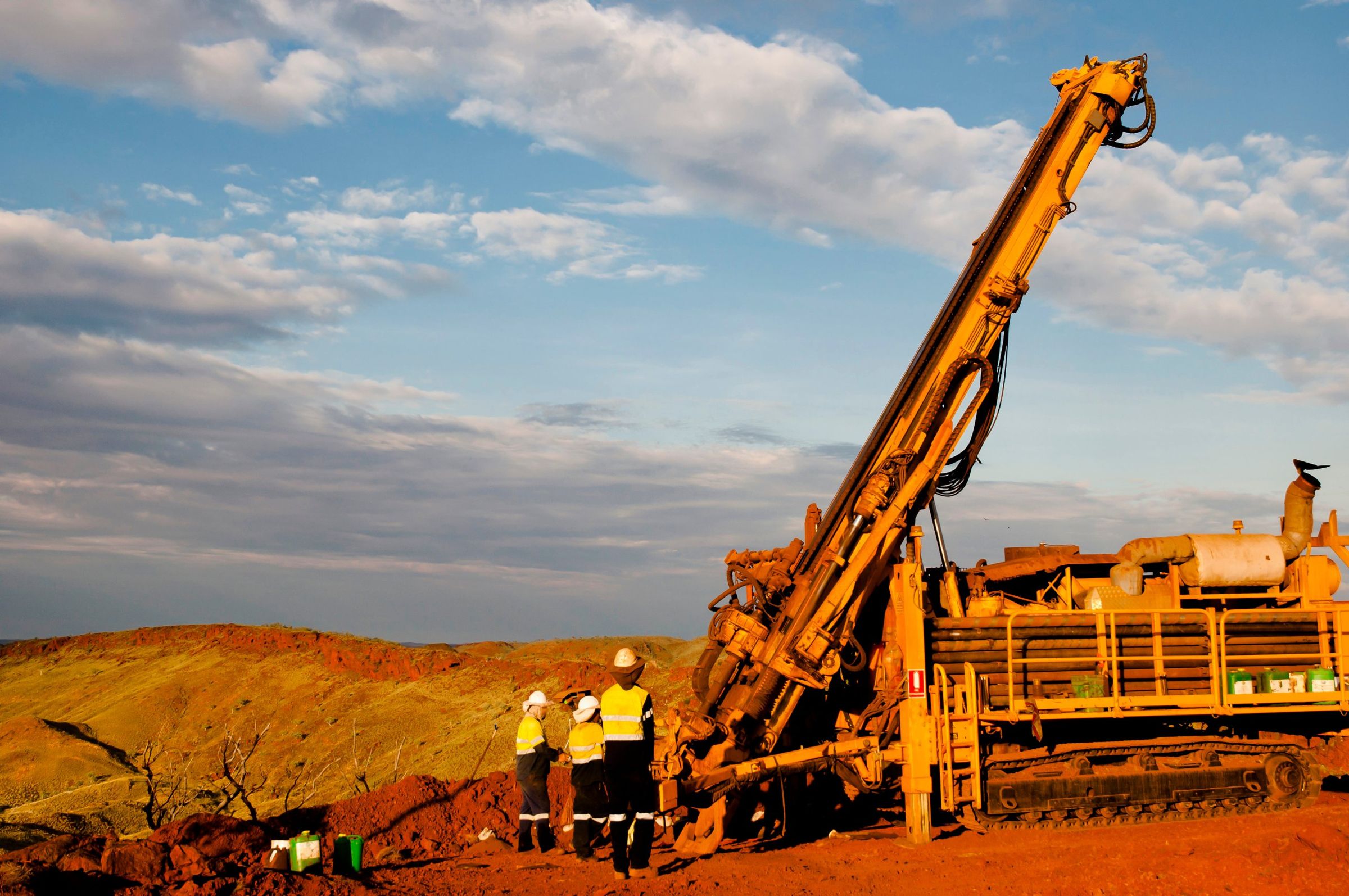
From the belt to the drill hole. Every step earns the next.
Exploration is a science of structure, process and prediction. We start at the scale of the belt and narrow, step by step, to the metre at which gold is mined. At each scale, the data either strengthens the geological case or ends it.
Each scale answers one question.
What we look for in Africa's greenstone belts.
Most of Africa's gold is orogenic: quartz veins, vein arrays and disseminated sulphides along shear zones in Archaean and Palaeoproterozoic greenstone belts, from the Birimian of West Africa, deformed in the Eburnean orogeny about 2.1 billion years ago, to the much older belts of the Tanzanian and Zimbabwe cratons. The richest shoots sit where the structures bend, branch or cross.
Across the tropical belt, deep weathering has built a layered profile: ferruginous duricrust, mottled clays, saprolite, then fresh rock. Each layer behaves differently. Gold can be enriched in the laterite, leached in the clays, preserved in the saprolite and locked in sulphides at depth.
Reading that profile correctly is the difference between a surface anomaly and a mine.